





Offshore company formation is legal in all countries when it is used for legitimate business purposes and operated in compliance with applicable laws. A business owner, investor, or entrepreneur may lawfully incorporate a company outside their country of residence or primary market for commercial, operational, investment, or regional-expansion reasons.
However, legality depends on how the company is used. An offshore structure must comply with corporate, tax, banking, anti-money-laundering, beneficial-ownership, and reporting rules in all relevant jurisdictions. Recent international regulation – have made offshore structures more transparent and more closely monitored than ever before. Let’s find out!
What Is an Offshore Company?

An offshore company is a legal entity incorporated in a jurisdiction other than the owner’s home country or principal place of business. For example, a Vietnamese entrepreneur may incorporate a company in Singapore or Hong Kong to serve Asian clients, a European technology group may establish a U.S. subsidiary to contract with American customers, or an investment group may use a holding company in another jurisdiction to manage assets across several countries.
However, incorporation alone does not determine where a company is taxed. Tax authorities often consider where the company is effectively controlled and managed, where key decisions are made, where directors and employees are located, where contracts are signed, and where the company performs its real business activities. An offshore company may still be considered tax resident in another country if its management and control are located there.
The legality of the structure depends on facts such as:
- the company’s purpose and its actual activities;
- where strategic decisions are made and management is controlled;
- where offices, employees, directors, shareholders and customers are located;
- whether tax residence and permanent-establishment rules apply;
- whether income, accounts, investments are reported where required.
Legal Tax Planning vs. Illegal Tax Evasion
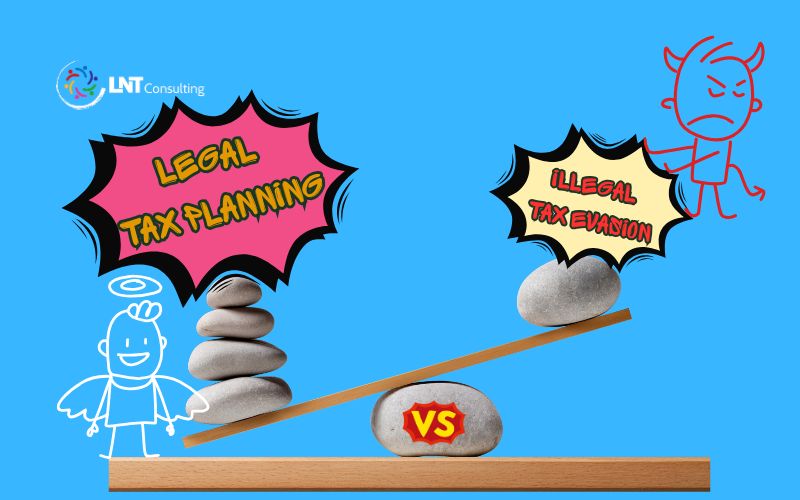
Legal tax planning involves arranging business affairs within the boundaries of the law. This can include but not limited to use available tax incentives, apply tax treaties where eligibility requirements are met, select an appropriate jurisdiction for a real business function, or structuring international operations efficiently.
Illegal tax evasion involves deliberately concealing income, assets, ultimate beneficial ownership, transactions or tax residence. Examples may include filing false tax returns, using undisclosed accounts, or misrepresenting the purpose of transactions.
The distinction is important: a lower tax result is not automatically unlawful, but the arrangement must be transparent, commercially supportable and properly reported.
Under the Common Reporting Standard, commonly known as CRS, financial institutions may collect information about account holders and controlling persons, including tax residence and taxpayer identification details. That information can be reported to local tax authorities and exchanged with other participating jurisdictions.
For offshore company owners, CRS means that foreign bank accounts may be visible to tax authorities in the owner’s country of tax residence. Incorporating an offshore company does not remove the obligation to report foreign income, assets or accounts where local law requires disclosure.
Recent CRS updates have expanded the framework to address direct or indirect investments in crypto assets. This reflects a broader shift toward greater transparency across both traditional finance and digital assets.
The Crypto-Asset Reporting Framework, or CARF, is designed to help tax authorities obtain information about reportable crypto-asset transactions involving users of crypto-asset service providers.
CARF is expected to require participating crypto-asset service providers to identify relevant users, collect tax-residence information and report certain transactions, such as exchanges, transfers and holdings, depending on the local implementation rules.
A Practical Offshore Compliance Checklist
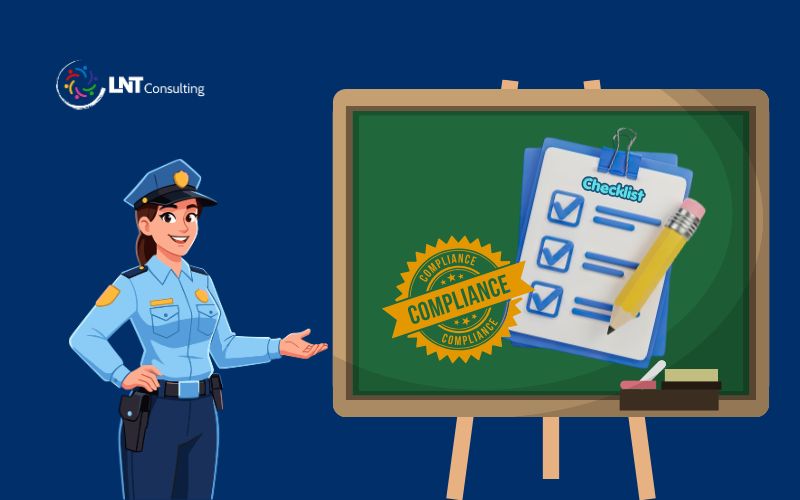
Before opening an offshore company, consider the following compliance steps:
- Confirm the company’s beneficial owners and comply with ownership-register requirements.
- Determine tax residence based on incorporation, management and control, and local tax rules.
- Maintain accurate accounting records, financial statements, invoices, contracts and board documentation.
- Meet annual corporate filing, tax filing and licensing requirements.
- Assess economic-substance requirements, including local directors, employees, premises and operating expenditure where applicable.
- Check whether tax treaty benefits are available.
- Report foreign companies, bank accounts, investments and income in the owner’s country of tax residence where required.
- Obtain advice from qualified legal, tax and accounting professionals in the jurisdictions involved.
Offshore company formation can be a lawful and useful tool for international business. However, it becomes problematic when it is used to hide ownership, income, assets or any tax obligations.
The current regulatory environment is moving toward more automatic information sharing, more crypto-asset reporting and stronger minimum-tax rules. Recent requirements make it increasingly important for businesses to maintain transparency, commercial substance and accurate reporting.
Before incorporating abroad, businesses should seek jurisdiction-specific legal and tax advice to ensure the structure supports long-term growth without creating unnecessary compliance risk. You can contact LNT Consulting LLC, our expertise is so delighted to hear your ideas and give you more advice.
